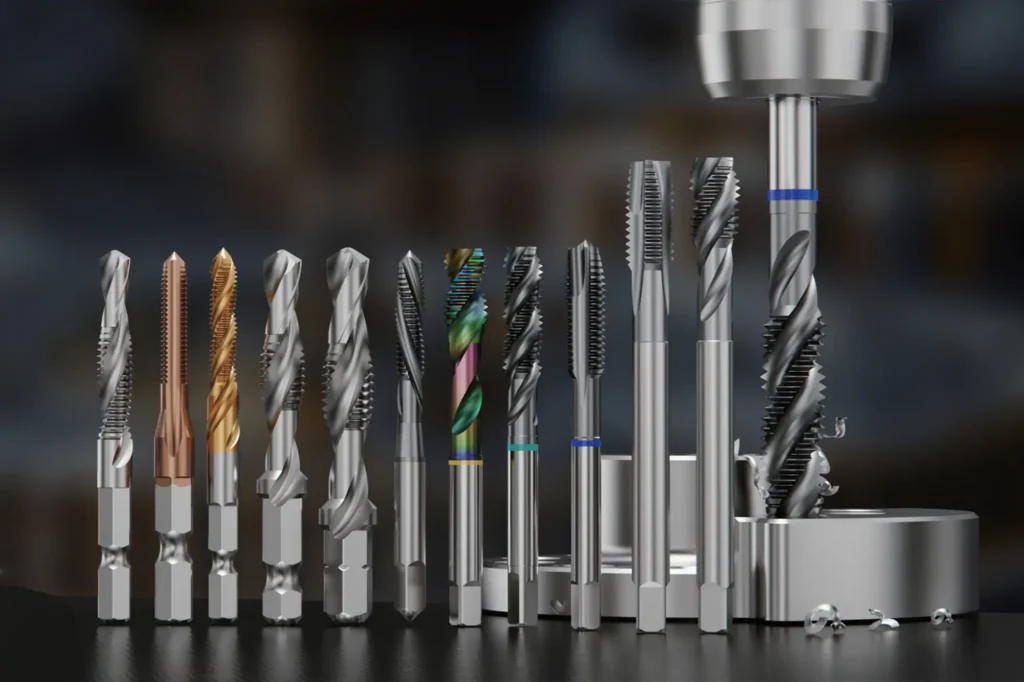

Drills and taps are essential tools in metalworking, especially for creating threaded holes in various materials. While a drill bit is used to create the initial hole, a tap is responsible for cutting internal threads. Choosing the right combination of drill and tap is key to achieving accurate threads and efficient machining.
Matching Drill Sizes with Tap Threads
To match a drill with a tap, the general rule is:
Drill Diameter = Thread Nominal Diameter – Thread Pitch
For example:
For an M3×0.5 thread, the ideal drill size is 2.5mm (3 – 0.5).
For an M5×0.8 thread, the recommended drill size is 4.2mm (5 – 0.8).
In practice, you can slightly increase the drill diameter to reduce tapping resistance — for instance, an M5×0.8 thread can also be drilled with a 4.3mm bit if needed.
Step-by-Step Threading Process
Preparation
Select the appropriate drill bit and tap for your thread size. Prepare cutting fluid or lubricant, and ensure your tools are clean and in good condition.Drilling the Hole
Use the drill bit to create a straight, centered hole in the workpiece. The hole diameter must be slightly smaller than the tap’s outer diameter to ensure effective thread formation.Tapping the Thread
Align the tap with the drilled hole and apply light axial pressure. Begin turning the tap slowly and steadily to start the cutting process. For blind holes, use a tap designed for such applications (e.g., spiral flute or bottoming taps).Lubrication and Chip Removal
During tapping, regularly clean chips from the tap and apply lubricant to reduce friction, prevent tool wear, and improve thread surface finish.Precautions
Always choose a tap suitable for the material being processed.
Avoid excessive cutting force to prevent tap breakage.
Maintain consistent feed and rotation speed.
Ensure safety during operation by wearing proper protection.
Conclusion
Matching the correct drill bit with the appropriate tap is fundamental to creating accurate, durable threads. Following the recommended drilling and tapping procedures will enhance your threading performance, reduce tool wear, and improve overall workpiece quality.